
Climate Change is Altering the Growth Cycle of Arabica Coffee
According to the Fourth Assessment Report of the WMO/UNEP Intergovernmental Panel on Climate Change (IPCC) published in 2007, semi-arid and sub-humid areas in Asia, Africa, and Latin America will increase. As the global climate warms, average temperatures in coffee-growing areas are higher, and extreme weather is a climate change factor that disrupts the growth cycle of Arabica coffee trees, making cultivation difficult. becomes difficult and unpredictable.

Typically, Arabica coffee thrives in tropical forests at altitudes of 1,500–2,800 meters above sea level, between latitudes 4°N and 9°N. In these regions, seasonal temperature fluctuations are minimal, with annual average temperatures between 18 and 22°C. Rainfall is evenly distributed, ranging from 1,600 to over 2,000 mm, with a dry season lasting 3 to 4 months coinciding with the cooler months. In such an environment, Arabica coffee grows well as an understory shrub and yields high-quality beans.
However, Arabica coffee is highly sensitive to environmental conditions, particularly photoperiod changes and meteorological factors like rainfall distribution and air temperature, which impact plant phenology, yield, and bean quality.
Research by scientist Camargo shows that when environmental temperatures exceed 23°C, the development and ripening of Arabica cherries accelerate, often resulting in reduced quality. Studies by Damatta & Ramalho indicate that prolonged exposure to daily temperatures of 30°C can disrupt growth and lead to abnormalities, such as yellowing leaves. High temperatures also disrupt the plant’s metabolic processes, with leaves absorbing more energy from radiation than can be utilized in photosynthesis, causing overheating and leaf drop.
In addition, relatively high air temperatures during the flowering period, especially when combined with extended dry seasons, can result in flower drop and a lower fruit set. Rapid plant growth may also lead to lower coffee bean quality. High maximum temperatures during summer can cause over-ripening of cherries, reducing fruit quality.

Moreover, climate change has led to an increase in extreme conditions, such as frost, which can cause physiological stress, lower photosynthesis efficiency, increase disease susceptibility, and heighten irrigation needs. Key stages like flowering and seed development are linked to the dormancy phase of buds, with high temperatures and dry conditions during the reproductive phase critically affecting yield and coffee quality. Establishing proper air temperature limits for coffee is crucial for determining the crop’s economic distribution and viability.
A report from Infobibos also highlights that climate change is a major factor in coffee yield variability and decline worldwide. The relationship between climate variables and agricultural production is complex, as environmental factors impact crop growth and development at various stages in the coffee plant’s lifecycle. Photosynthesis becomes restricted under water stress, with stomata closing and other physiological activities decreasing. Other climatic factors can also reduce yield, such as adverse air temperatures during different growth stages.
The report notes that coffee yields in tropical Asia are sensitive not only to rising temperatures but also to changes in monsoon characteristics. In semi-arid tropical Africa, climate change has increased drought frequency, posing the greatest risk to agriculture. In Latin America, air temperatures are projected to rise by 1°C to 5.8°C, with rainfall increasing by 15% in tropical regions of Brazil. Agriculture and water resources face significant impacts due to extreme temperatures and rainfall variability. Although these projections are concerning, it’s important to note that the reports carry a degree of uncertainty regarding long-term forecast outcomes.

Bài viết mới

- Find the Origin
Mandela coffee variety – A convergence of generations from a masterpiece breeding strategy
Amidst the constant fluctuations of the era, Mandela emerges as a gentle yet resilient response from the soil. Instead of attempting to alter or impose upon nature, this breeding strategy is, in essence, a profound act of listening. Each Mandela coffee bean carries the bloodline of multiple generations, possessing both the serene, steadfast nature of native trees and the sparkling elegance of premium varieties. It is a sacred continuation, where the flow of generations ultimate honors the original value of the species, imparting an intact and sustainable vitality into every cup.


- Taste the Origin
Nigussie Nare – Murago Outgrowers #03028: Cultivated from the Values of Sustainable Reciprocity
Nestled beneath the shade trees of Sidama, Bensa, the Nigussie Nare – Murago Outgrowers #03028 coffee lot serves as a living testament to the values of sustainable reciprocity. This symbiosis begins with the intimate bond between a rich indigenous ecosystem and the smallholder farmers of the Murago region. Each harvested bean is the culmination of a virtuous cycle: a stable environment produces exceptional bean quality, and sustainable economic growth, in turn, continues to protect the verdant canopy of the great forest.

- Taste the Origin
Rift Valley Coffee Caucus #03757 – A Testament to Western Kenya’s Collective Spirit
Turning our gaze to the Great Rift Valley of East Africa, the fertile volcanic landscapes are witnessing an inspiring transformation. Moving away from fierce, survival-driven competition, smallholder farmers in Western Kenya have chosen to join forces, forging a resilient and unified network. The Rift Valley Coffee Caucus #03757 lot stands as the ultimate testament to this remarkable collective synergy.

- Breaking News
Airworks Coffee & XLIII Coffee – A “handshake” that brings original flavors across borders
XLIII Coffee, alongside our key wholesale partner Airworks Coffee, officially announces the latest release of specialty coffee lots for the North American market. This event reaffirms our commitment to bringing original flavors across all geographical barriers to coffee enthusiasts.
Early access (for Subscribers of Airworks): 10:00 AM (PST) | Wednesday, April 29, 2026
General access: 10:00 AM (PST) | Friday, May 1, 2026
We invite our Customers and Partners to visit (airworkscoffee.com) for detailed information and to prepare for this special release!
- Taste the Origin
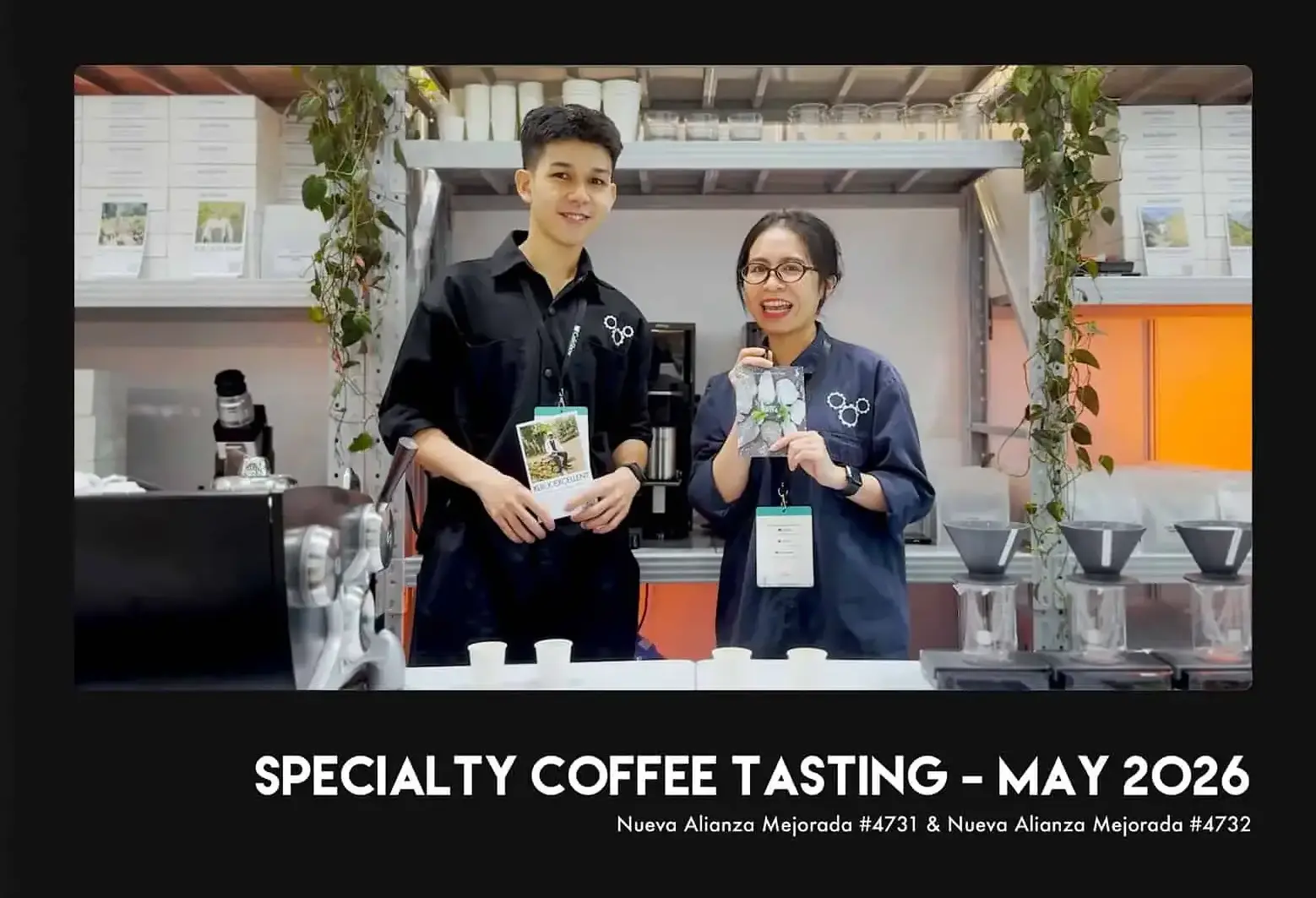
Unveiling May Discovery Subscription: Nueva Alianza Mejorada #4731 & Nueva Alianza Mejorada #4732
The Discovery Subscription is a silent dialogue, a place where the soul of the connoisseur finds a harmonious beat with distant lands. Like a transparent lens, we become storytellers, meticulously peeling back layers of cultural sediment, the breath of the soil, and the human philosophies hidden within every coffee bean.
May arrives with brilliant streaks of golden sunlight, a time when we long to hide beneath the lush, dew-drenched canopies of Santa Teresa. Amidst the silence of the Andes, when compassion touches Mother Earth, what will we hear? Perhaps it is a sweet response that nature reserves solely for souls who know how to wait patiently.

Specialty Coffee in Vietnam
BRAND VALUE
YOU SHOULD HAVE KNOWN
XLIII Coffee has been aiming to become a big, impactful company with social responsibilities,
have access to high-quality raw materials and convey the complete original values of coffee to our customer
